 சினிமா
 டிவி
டிவி Podcast
 iPaper
 கோயில்கள்
 புத்தகங்கள்
 Subscription
 திருக்குறள்
 கடல் தாமரை
Disadvantaged teens face greater harm from problematic social media use: Study
Disadvantaged teens face greater harm from problematic social media use: Study
UPDATED : மே 04, 2026 09:09 PM
ADDED : மே 04, 2026 09:13 PM

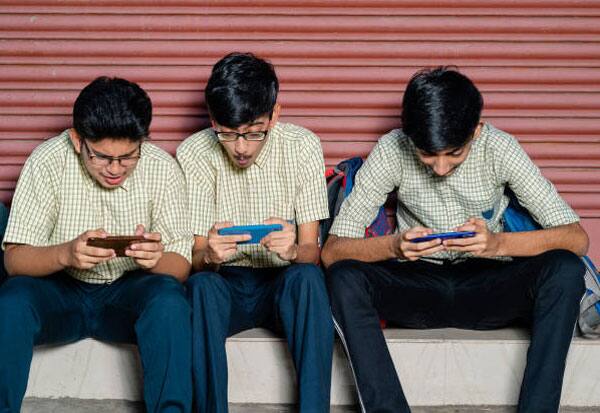
Barcelona: A study examining teenagers' social media behaviour across 43 countries has found that problematic use is consistently associated with poorer well-being, with adolescents from disadvantaged backgrounds facing greater risks.
The research, published in the World Happiness Report 2026, analysed data from over 3.3 lakh young people across multiple regions, including Anglo-Celtic, Central-Eastern Europe, Mediterranean, Nordic and Western Europe.
Link between social media use and well-being
The study found that higher levels of problematic social media use — defined as compulsive or uncontrolled engagement — are linked to increased psychological complaints such as anxiety, irritability and sleep difficulties.
Teenagers reporting such behaviour were also found to have lower life satisfaction, reflecting a less positive evaluation of their overall lives.
Regional variations observed
While the association between problematic use and poorer well-being was observed across all countries, its intensity varied by region.
The impact was found to be stronger in Anglo-Celtic countries such as the UK and Ireland, and comparatively weaker in the Caucasus-Black Sea region.
Socioeconomic background plays key role
The study highlighted that adolescents from less advantaged socioeconomic backgrounds are more vulnerable to the negative consequences of problematic social media use.
Researchers noted that disparities were more evident in life satisfaction than in psychological complaints, suggesting that social comparisons on digital platforms may amplify perceived inequalities.
Growing risks over time
The analysis showed that the link between problematic social media use and poor well-being strengthened between 2018 and 2022, indicating increasing risks associated with digital engagement.
However, the study noted that while inequalities persist, they have not significantly widened over this period.
Need for targeted interventions
The findings underline the importance of recognising differences in how young people experience the digital world.
Researchers said policy responses should move beyond a one-size-fits-all approach and instead focus on targeted interventions to support the most vulnerable groups.

Advertisement