 சினிமா
 டிவி
 Podcast
 iPaper
 கோயில்கள்
 புத்தகங்கள்
 Subscription
 திருக்குறள்
 கடல் தாமரை

NEET Debate: Balagurusamy urges TN to focus on school education reforms
NEET Debate: Balagurusamy urges TN to focus on school education reforms
UPDATED : நவ 16, 2026 06:18 PM
ADDED : நவ 16, 2026 06:20 PM

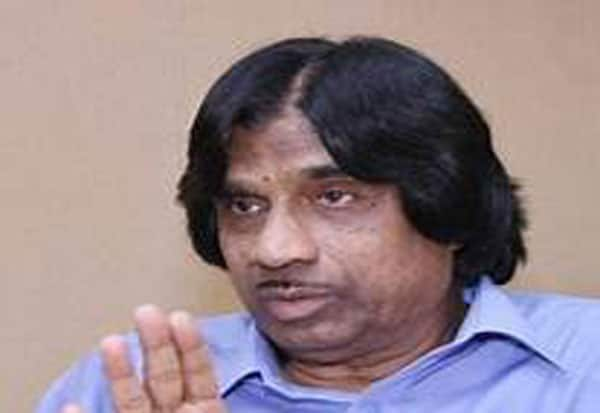
Chennai: Former Anna University Vice-Chancellor and former Union Public Service Commission (UPSC) member Prof. E. Balagurusamy has urged the Tamil Nadu government to reconsider its opposition to the National Eligibility-cum-Entrance Test (NEET) and focus instead on improving the quality of school education and preparing students to compete in national-level examinations.
In an appeal addressed to Chief Minister M.K. Stalin on Monday, he argued that abolishing NEET would not automatically ensure social justice or improve opportunities for disadvantaged students. Instead, he called for strengthening government schools, providing free NEET coaching, improving teacher quality and ensuring that students from rural and economically weaker backgrounds receive adequate academic support.
His appeal comes after the Tamil Nadu Legislative Assembly passed another resolution on August 11, 2026, urging the Union government to abolish NEET for undergraduate medical admissions and allow the State to admit students based on Class XII examination marks.
While acknowledging the concerns of successive State governments about students from economically weaker sections, rural areas and Tamil-medium schools, Balagurusamy maintained that opposing NEET was not the right solution.
He pointed out that NEET is provided for under Section 14 of the National Medical Commission Act, 2019, and that the Supreme Court upheld the constitutional validity of the uniform entrance examination framework in its judgment dated April 29, 2020. He said a State Assembly resolution alone could not exempt Tamil Nadu students from the existing national framework and that any fundamental change would require action at the national legislative level.
Why a common entrance examination is needed
Explaining the need for entrance examinations, Balagurusamy said they serve two major purposes: assessing whether students possess the academic knowledge required for a particular course and providing a common basis for selecting candidates.
He said such a system was particularly important for medical education, which requires extensive scientific knowledge, clinical competence and professional responsibility.
Before NEET, students had to appear for multiple entrance examinations conducted by different States, universities, central institutions and deemed universities. According to him, a common examination has reduced this burden, saving students time, money and effort.
He also highlighted the wider opportunities available through NEET qualification, enabling eligible Tamil Nadu students to compete for medical seats in institutions across the country, including AIIMS, JIPMER, central institutions, deemed universities and other medical colleges, subject to applicable eligibility and counselling rules.
He said a common examination followed by centralised or State-level counselling could make admissions more transparent and reduce arbitrary selection. However, he acknowledged that NEET alone could not eliminate capitation fees or unreasonable tuition charges, stressing the need for effective fee regulation and enforcement.
NEET and reservation are separate issues
Addressing concerns that NEET could affect Tamil Nadu's reservation policy, Balagurusamy said the entrance examination and reservation were two different aspects of the admission process.
He maintained that the State's existing reservation policy could continue for seats under its jurisdiction, subject to applicable laws and regulations. Reservation provisions for All India Quota seats, meanwhile, are governed by the corresponding national rules.
He also argued that NEET should not be viewed merely as a political initiative of a particular party. The idea of a common medical entrance examination had evolved through the efforts of different governments and regulatory authorities before receiving its present statutory basis under the National Medical Commission Act, 2019.
Unequal school education is the real challenge
A major concern raised in his appeal was the difference in educational opportunities available to students from affluent families and those studying in government schools in rural areas.
He acknowledged that students attending expensive private schools often have better access to teachers, laboratories, learning materials and coaching facilities. Government-school students, particularly those from rural and Tamil-medium backgrounds, may not have similar advantages.
However, he argued that abolishing NEET would not automatically remove these inequalities or guarantee better opportunities for disadvantaged students.
He urged the State government to examine whether schools provide adequate teaching in Physics, Chemistry and Biology, whether qualified teachers are available, whether laboratories are properly equipped and whether students develop conceptual understanding, analytical thinking and problem-solving abilities rather than relying primarily on memorisation.
He also called for a review of teaching and learning standards in Classes XI and XII, particularly in government and government-aided schools. The curriculum, he suggested, should be appropriately aligned with national learning standards without compromising the State's educational objectives and regional priorities.
Eight-point action plan proposed
Instead of concentrating on opposing NEET, Balagurusamy proposed an eight-point action plan to improve students' performance and access to medical education.
The recommendations include:
Strengthening science education: Improving the teaching of Physics, Chemistry, Biology and Mathematics in Classes XI and XII, while ensuring adequate laboratories, learning materials and qualified teachers.
Free NEET coaching: Establishing a professionally managed preparation programme for government and government-aided school students, with classroom instruction, online resources, practice examinations, doubt-clearing sessions and individual mentoring.
Supporting disadvantaged students: Providing additional academic assistance to students from rural areas, economically weaker families, first-generation learner backgrounds and Tamil-medium schools.
Improving teacher quality: Recruiting qualified teachers to fill vacancies and providing regular professional development in conceptual teaching, scientific reasoning, analytical thinking and modern teaching methods.
Upgrading school infrastructure: Ensuring that government schools have functional laboratories, libraries, digital learning facilities and other essential infrastructure.
Student counselling and support: Establishing professional counselling, mentoring and mental-health support systems for students preparing for competitive examinations.
Ensuring transparency in admissions: Monitoring counselling and admissions in private medical colleges and deemed universities and taking strict action against capitation fees, unauthorised charges and unethical admission practices.
Independent monitoring: Constituting an expert committee comprising educationists, medical professionals, school administrators and assessment and education policy experts to review Tamil Nadu students' performance in NEET, identify shortcomings and recommend corrective measures. He also suggested publishing an annual report on the progress made, particularly among government-school students.
Calls for a shift from political confrontation to educational reform
Balagurusamy also addressed concerns about student suicides linked to examination results. While acknowledging tragic instances involving students who took their lives following disappointing results, he cautioned against attributing such deaths to a single examination.
He said academic pressure, family expectations, financial difficulties, mental-health challenges and personal circumstances could contribute to such tragedies. Schools, parents, educational institutions and the government, he stressed, must work together to provide counselling, emotional support and timely professional help.
He also rejected generalisations that Tamil Nadu students did not want to write NEET or were incapable of performing well in the examination. He said many students aspired to compete nationally and gain admission to reputed medical institutions, while others had genuine concerns about the availability and affordability of preparation facilities.
In his concluding appeal, Balagurusamy urged the Chief Minister to place students' long-term interests above political differences and focus on empowering them to compete successfully.
He said the objective should not merely be to secure medical admissions but to prepare competent, compassionate and professionally qualified doctors for society.
" Our objective should not be to protect students from competition, but to empower them to succeed in competition," he said in his appeal.
He further urged the State government to protect its reservation policy, improve the quality of government schools and ensure that poverty, geographical location or medium of instruction did not prevent deserving students from pursuing medical education.

Advertisement