 சினிமா
 டிவி
 Podcast
 iPaper
 கோயில்கள்
 புத்தகங்கள்
 Subscription
 திருக்குறள்
 கடல் தாமரை

ஆக 21, 2026 06:23 PM
ஆக 21, 2026 06:23 PM

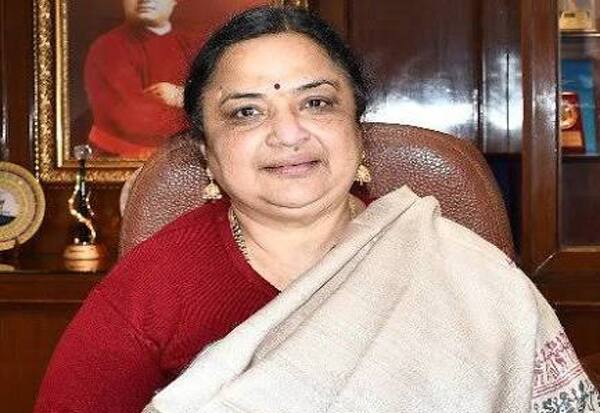
JNU Vice-Chancellor Shantisree Pandit on student politics, education reforms and the future of higher education
Universities are meant to be places where young minds explore ideas, question assumptions and prepare for the future. They should not become political battlegrounds or training grounds for aspiring politicians, says Shantisree Dhulipudi Pandit, Vice-Chancellor of Jawaharlal Nehru University (JNU), New Delhi.
A Tamil Nadu native, Dr. Pandit is the first woman to head JNU. In an interaction with Dinamalar, she shared her views on university administration, student politics, academic standards, funding and the reforms needed to make higher education more relevant to today's students.
Breaking Barriers in University Leadership
Dr. Pandit says her journey as JNU's first woman Vice-Chancellor has been both challenging and rewarding. She also takes pride in being the first Vice-Chancellor from Tamil Nadu in the university's history.
According to her, women in leadership positions still face misconceptions, including the assumption that they may lack the confidence or independence required to make important decisions.
Having once been a student at JNU herself, she says her understanding of the institution, combined with the support of faculty members and students, has helped her lead the university effectively. She also points to the completion of pending faculty recruitment for SC, ST and OBC categories as one of the significant steps taken during her tenure.
Why JNU Remains Attractive to Students
JNU continues to enjoy a strong reputation for academic excellence. Dr. Pandit highlights its highly qualified faculty and staff and its position among India's leading universities.
One of its major strengths, she says, is its affordability. With substantial government support, students can pursue higher education at remarkably low fees. Some programmes charge fees as low as ₹10 to ₹20.
This affordability enables students from less privileged social and economic backgrounds to access higher education. According to Dr. Pandit, around 70 per cent of JNU's students come from such backgrounds.
Student Politics: Participation vs. Political Interference
Student participation in university affairs is important, but Dr. Pandit draws a distinction between student representation and external political influence.
She believes an independent student union working for student welfare has an important role to play. However, she argues that outside political parties and organisations should not influence university campuses.
“Universities should not become political battlegrounds or training centres for future politicians,” she says, stressing that excessive political involvement can also create opportunities for external funding and influence.
Why Do Campus Protests Happen?
Dr. Pandit attributes some campus conflicts to long-standing ideological and organisational influences within higher education. She argues that certain groups that once exercised considerable influence over universities are now facing a decline in their control, which, in her view, has contributed to tensions and disturbances in some institutions.
She also expresses concern about the repeated circulation of claims that, according to her, are not supported by facts, but are gradually presented as accepted truths.
India Needs to Invest More in Education
For Dr. Pandit, the future of Indian higher education depends heavily on investment.
She points out that India's expenditure on education as a proportion of GDP remains significantly lower than that of some other major Asian economies. She believes public investment should be increased substantially, particularly as the number of Central Universities, IITs and IIMs has expanded.
More institutions without corresponding investment in infrastructure, faculty and academic resources, she suggests, could limit the benefits of expansion.
Beyond Degrees: Preparing Students for the Real World
Perhaps the most important message for students is that higher education cannot remain confined to classrooms and examinations.
Dr. Pandit advocates a holistic approach to education, combining science and technology with arts, humanities and languages. Such an approach, she believes, can help students develop broader perspectives and become adaptable professionals.
She also calls for stronger partnerships between educational institutions and industry so that students acquire the practical knowledge, professional skills and adaptability required by the changing employment market.
The University of Tomorrow
The university of the future, therefore, should be more than a place that awards degrees. It should be a space where students learn to think critically, engage responsibly with society, respect differing viewpoints and develop skills for an evolving world.
Dr. Pandit's message is clear: universities must protect academic freedom and student participation while ensuring that education remains their primary purpose.

Advertisement