 டைம்லைன்
 தினமலர் டிவி
 Podcast
 iPaper
 சினிமா
 கோயில்கள்
 புத்தகங்கள்
 Subscription
 திருக்குறள்
 கடல் தாமரை
/
செய்திகள்
/
Kalvimalar
/
News
/
Curriculum must align with national priorities; PhD programmes to be industry-centric: Pradhan
/
Curriculum must align with national priorities; PhD programmes to be industry-centric: Pradhan
Curriculum must align with national priorities; PhD programmes to be industry-centric: Pradhan
Curriculum must align with national priorities; PhD programmes to be industry-centric: Pradhan
UPDATED : ஜன 13, 2026 11:19 PM
ADDED : ஜன 13, 2026 11:21 PM

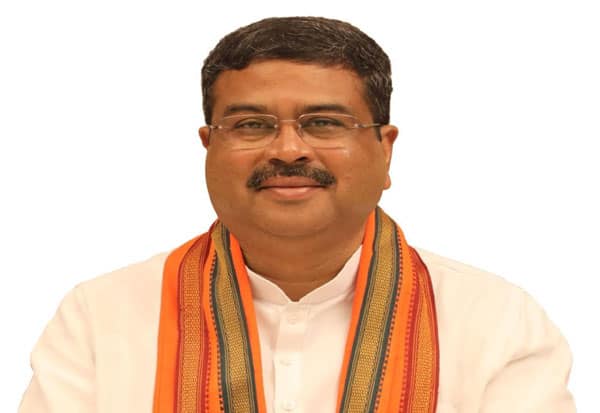
New Delhi: Union Education Minister Dharmendra Pradhan on Tuesday called for aligning academic curricula with national priorities and making PhD programmes more industry-centric, while chairing the 13th meeting of the Council of the National Institutes of Technology, Science Education and Research (NITSER).
The meeting was held at Bharat Mandapam here and was preceded by the third meeting of the Standing Committee of the Indian Institutes of Science Education and Research (IISERs).
Reviewing presentations on improving academic and research standards, governance efficiency and innovation at NITs and the Indian Institute of Engineering Science and Technology (IIEST), Pradhan said curricula must reflect emerging job roles and 21st-century requirements.
“Our curriculum must be aligned to national priorities. PhD programmes should be industry-led and industry-funded,” he said, suggesting the creation of industry-led curriculum committees to design courses relevant to evolving technologies.
The minister also stressed that premier technological institutions should come under the national accreditation framework, describing accreditation as a key quality assurance mechanism.
Pradhan said NITs and IIESTs are poised to emerge as hubs of applied education, research and innovation, contributing to workforce development and the vision of Viksit Bharat.
During the meeting, the Council discussed reforms to align curricula, assessments and research with critical and emerging areas such as Industry 4.0, green hydrogen, artificial intelligence, data analytics, cybersecurity, quantum technologies and semiconductors.
The Council underscored the need for 360-degree PhD reforms, including industry-led and product-based doctoral programmes, and emphasised strengthening innovation and entrepreneurship ecosystems to shift from job seekers to job creators.
It was decided that NITs without incubation centres should establish them immediately, while at least 10 NITs should initiate research parks. A pitching conclave for NIT-incubated startups is planned for July 2026 in collaboration with investors and industry stakeholders.
All NITs and IISERs agreed to complete external peer reviews within one year and actively participate in the accreditation process. The meeting also highlighted promoting inclusivity through the use of Bharatiya Bhashas and adopting artificial intelligence for multilingual learning.
The meeting was attended by Members of Parliament, heads of academic and regulatory bodies, directors of leading institutions, and senior officials from the ministries of education, electronics and IT, and science and technology.

Advertisement