 சினிமா
 டிவி
 Podcast
 iPaper
 கோயில்கள்
 புத்தகங்கள்
 Subscription
 திருக்குறள்
 கடல் தாமரை

India reduces visa categories from 13 to 9, cuts application form fields by up to 70 per cent: MHA
India reduces visa categories from 13 to 9, cuts application form fields by up to 70 per cent: MHA
UPDATED : நவ 11, 2026 11:07 PM
ADDED : நவ 11, 2026 11:09 PM

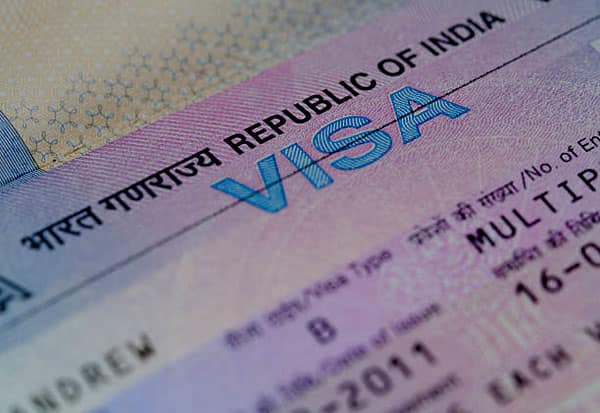
New Delhi: The government has reduced the number of main Indian visa categories from 13 to nine and sub-categories from 49 to 23, while cutting the number of fields in visa application forms by 65-70 per cent to simplify the process for foreign nationals, officials said on Wednesday.
The changes are aimed at making the visa regime "more compact, coherent and responsive to the requirements of foreign nationals visiting India", the Ministry of Home Affairs (MHA) said in a statement.
On August 27, the MHA reduced the number of main visa categories from 13 to nine and sub-categories from 49 to 23. This followed an earlier rationalisation in October 2025, when the main visa categories were cut from 22 to 13 and sub-categories from 63 to 49.
"While considering the simplification of the Indian visa regime, the government studied the visa systems of developed countries and global standards," the statement said.
The consolidation of similar travel purposes is aimed at providing greater clarity and making it easier to identify the appropriate visa category while facilitating legitimate foreign arrivals.
Currently, e-visas are processed under 13 sub-categories, and the facility is available to nationals of 172 countries, the statement said.
The erstwhile Tourist Visa has been renamed Visitor Visa to reflect a broader range of permitted activities beyond conventional tourism. It has been consolidated into two sub-categories, V-1 and V-2.
The V-1 visa covers short-term activities such as business meetings, medical consultations, wellness retreats, short-duration medical treatment and short-term courses in Indian languages, music, art and craft. It is granted for 30 days with multiple entries.
The V-2 visa is intended for longer visits, with validity of one, five or 10 years, as specified. It covers activities permitted under V-1 and mountaineering. For mountaineering, a six-month multiple-entry visa will be granted.
The Medical Visa framework retains separate provisions for treatment under conventional and AYUSH systems. The M-1 visa covers medical treatment other than AYUSH, while the M-3 visa covers treatment under AYUSH systems.
Both visas, including their e-visa variants, will generally be granted for one year with multiple entries.
Medical attendant visas are also available, with M-2 and M-4 visas granted to attendants of M-1 and M-3 visa holders, respectively.
The arrangement is expected to provide patients greater predictability when treatment involves multiple consultations, follow-up appointments or staged procedures, the statement said.
Multiple-entry validity can reduce the need for repeated visa applications during treatment, while the separate AYUSH provision helps applicants identify the appropriate treatment category, it added.
The Student Visa category has been consolidated into two broad sub-categories. The S-1 visa covers school, graduate and postgraduate education, while the S-2 visa covers PhD and research scholars in Indian universities, visiting faculty, foreign research students, scientific and anthropological expeditions, internships and exchange students, among other academic activities.
For foreign students enrolled in Indian educational institutions through the Study in India portal, the e-S1 visa may be granted for up to five years or the duration of the academic course, whichever is less, with multiple entries.
The Business Visa category has been consolidated into B-1 and B-2. The B-1 visa covers long-term, licence-based business activities, including foreign nationals seeking to establish industrial or business ventures in India.
The B-2 visa covers short-term, contract-based business activities, including production investment, conferences, sports, performing arts and films.
A specific provision has also been introduced for foreign subject-matter specialists, engineers and technical personnel engaged by Indian companies for activities such as installation and commissioning, quality checks, maintenance, production, IT and ERP ramp-up, training, supply-chain development, plant design, senior management and technical support.
Such personnel may be granted a Production Investment Business Visa under the B-2 category through the e-visa platform. This was earlier issued under the e-B4 visa category, the statement said.
The MHA has also undertaken a comprehensive exercise to simplify and rationalise visa application forms across all 23 categories and sub-categories.
The required fields in the forms have been reduced by 65-70 per cent, significantly cutting the information foreign nationals need to provide while retaining essential details for processing, the statement said.
The initiative is expected to reduce the time and effort required to complete applications and improve administrative efficiency through more focused scrutiny and processing.
The MHA is updating its IT systems to implement the changes, and visas will be granted under the revised framework by the end of this year, it said.
The nine main categories are Business, Diplomatic, Work, Journalist, Medical, Official, Student, Visitor and Miscellaneous visas.
The Miscellaneous Visa covers persons of Indian origin and their spouses and children, those joining specified institutions such as the Auroville Foundation, dependents of foreign nationals holding long-duration visas, stay visas for Afghan nationals, long-term visas for certain categories of nationals from neighbouring countries and other purposes not covered under the remaining categories.

Advertisement