 சினிமா
 டிவி
 Podcast
 iPaper
 கோயில்கள்
 புத்தகங்கள்
 Subscription
 திருக்குறள்
 கடல் தாமரை

NTA needs structural strengthening to address exam security concerns: Former UGC chairman
NTA needs structural strengthening to address exam security concerns: Former UGC chairman
UPDATED : ஆக 22, 2026 11:10 PM
ADDED : ஆக 22, 2026 11:12 PM

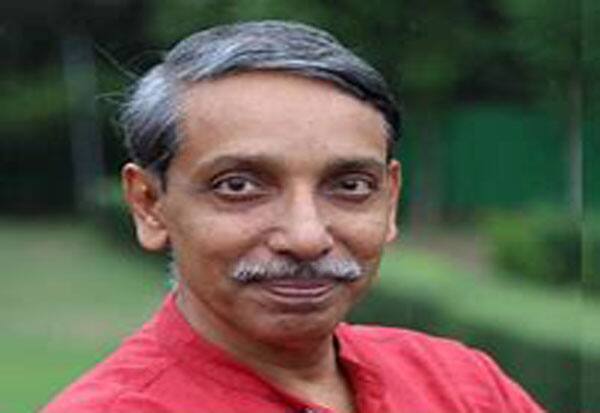
New Delhi: The National Testing Agency (NTA) needs "deep structural strengthening" to address recurring examination-security concerns, but replacing the agency altogether may not be the most useful solution, former UGC Chairman Mamidala Jagadesh Kumar said.
Speaking to PTI, Kumar, Chairman of the Review Committee for NEP 2020, said recurring paper-leak concerns should be viewed as an "end-to-end examination-security challenge", given the scale and complexity of examinations conducted by the NTA.
The Centre recently ordered several measures to strengthen the NTA and examination system following the NEET-UG paper leak issue and subsequent errors in the UGC-NET exam.
The government has also set up a high-level committee under technocrat Nandan Nilekani, while a law on curbing unfair means in public examinations was passed in Parliament to provide greater punishments.
"NTA operates examinations involving more than one crore candidates each year. At this scale, security depends on subject experts, digital systems, printers, transport, storage, centres, invigilators and service providers," Kumar said.
He said the Radhakrishnan Committee had examined the entire testing process and recommended stronger standard operating procedures, better data security, clear responsibility and closer coordination with states.
"The government and NTA have since introduced several recommended measures. The long-term solution is continuous risk assessment, fewer people handling confidential material, digital traceability and independent checks at every stage," Kumar said.
Asked whether the NTA had become overburdened with too many examinations, Kumar said its workload was "very large", but the number of examinations alone did not prove that the agency was overburdened.
"The real issue is the complexity behind each examination," he said, adding that the Radhakrishnan Committee had proposed a partnership model in which ministries, regulators or institutions seeking an examination should take responsibility for the syllabus, subject experts, question quality and academic validation.
He said the NTA can provide the secure platform, centre network, candidate verification, examination delivery and result processing.
On whether different examinations should be handled by different agencies, Kumar said he would not recommend dividing examinations among several agencies merely to reduce the visible workload.
"A single national testing body offers common security standards, technology, candidate services and result procedures. Creating many new agencies could duplicate costs and produce uneven safeguards," he said.
Kumar said the entire examination system needed to be reviewed holistically, covering question setting, translation, review, digital storage, printing or transmission, centres and invigilation.
"Every handover needs traceability and strict access control," he said.
He also stressed the need for permanent expertise in test design, cyber-security, languages, quality analysis, logistics and vendor management.
"The Radhakrishnan Committee addressed these areas and considerable action has followed," Kumar said, noting that the government reported in July that 35 of the committee's 46 major action points had been implemented.
On whether the NTA needed a complete overhaul, Kumar said the agency has accumulated experience, technology, examination records and a national centre network, which should be improved rather than discarded.
"NTA needs deep structural strengthening, but replacing the institution itself may not be the most useful answer," he said.
"The reported refresh of about 600 experts, onboarding of new specialists and introduction of four-tier question-paper scrutiny are important steps," he said.
He said the government's long-term approach should be to develop the NTA as a "mission-critical professional institution".
On whether the NTA's existing infrastructure was adequate to conduct high-stakes examinations at large scale, Kumar said the focus should not merely be on whether infrastructure existed but on how the agency could keep pace with changing needs.
"Infrastructure must therefore be tested and upgraded continuously," he said, adding that the next stage should focus on creating more accredited centres, preferably in dependable public institutions.
Kumar identified three reforms that should receive immediate priority -- securing the complete examination lifecycle, building permanent professional capacity and making examination centres and candidate services dependable.
"Accredited centres should provide CCTV monitoring, biometric verification, reliable power, connectivity, accessibility and trained staff," he said.

Advertisement