 சினிமா
 டிவி
 Podcast
 iPaper
 கோயில்கள்
 புத்தகங்கள்
 Subscription
 திருக்குறள்
 கடல் தாமரை

A blueprint to transform TN's education system into a global model
A blueprint to transform TN's education system into a global model
மே 22, 2026 08:23 PM
மே 22, 2026 08:23 PM

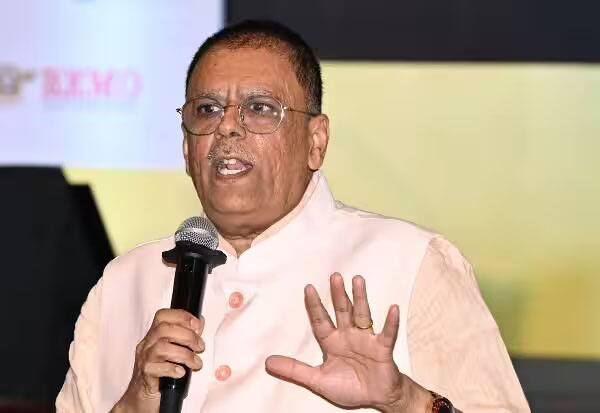
I would like to propose a bold long-term roadmap to Chief Minister Vijay aimed at transforming Tamil Nadu's education system into a world-class model while creating cutting-edge employment opportunities for lakhs of young people.
The proposal includes the following measures:
The State government should fully bear the examination fees for all national-level entrance tests such as NEET, JEE, CLAT, NIFT, and CUET for students studying in government and government-aided schools. This would remove the financial anxiety that burdens economically weaker students.
For students in rural and underdeveloped regions, school transport facilities must be introduced under a “One School, One Vehicle” policy.
Special priority should be given to the safety of girl students. School vehicles must be monitored through a dedicated safety application integrated with the “Rani Velu Nachiyar Force.”
Extravagant spending on entertainment and cultural festivals in colleges should be regulated. At least 60 percent of special institutional funds must be mandatorily allocated for skill laboratories and employability training programmes.
Tamil Nadu must introduce future-oriented undergraduate programmes such as B.Tech in Semiconductor Technology, B.Tech in Climate Technology and Sustainable Energy, and B.Tech in Defence and Space Research to meet emerging global demands.
All teachers across Tamil Nadu should undergo compulsory technology adaptation training once every two years under the guidance of Indian Institute of Technology Madras or Anna University, focusing on AI-powered teaching methods.
Every government engineering college should be upgraded into a “Mini Tech Hub” equipped with AR/VR laboratories and 3D printing facilities.
The Class 10 and Class 12 public examination systems should be redesigned with higher-order thinking, application-oriented questions, and case-study-based evaluation methods. Such reforms would eliminate rote learning from the roots.
From Class 8 onwards, a dedicated “Aptitude Hour” should be introduced every month. This would help students prepare early for corporate recruitment tests as well as competitive examinations such as UPSC and TNPSC even before graduation.
A specialised “Tamil Nadu Institute of Tech-Management” should be established to offer advanced MBA programmes in fields such as AI Management, Supply Chain Logistics, and FinTech.
No student should be awarded a degree without completing a verified three-month internship. Economically disadvantaged students should receive a government stipend of Rs 8,000 to Rs 10,000 through a guaranteed employability training scheme.
Career Guidance Centres must be established in every panchayat to help parents and students understand modern skill-based career opportunities.
Tamil Nadu should enact a Recruitment Accountability and Transparency Act to ensure that all government recruitment cycles — from notification to appointment orders — are completed within 365 days. This would prevent the wastage of the most valuable years of youth.
In partnership with leading private companies, the government should provide stipend-based annual training programmes for five lakh youths.
Private companies employing at least 75 percent of their workforce from Tamil Nadu should be encouraged through electricity subsidies and other incentives.
Government subsidies should also be extended to Micro, Small and Medium Enterprises to help them transition towards modern technologies such as automation.
A dedicated AI City focusing exclusively on Generative AI and Robotics must be created.
An exclusive Ministry for Artificial Intelligence should be formed to improve efficiency and generate employment opportunities across sectors ranging from agriculture to healthcare through data-driven governance.
Instead of students rushing only towards Computer Science and IT, the government must also provide incentives for core engineering disciplines such as Mechanical, Civil, and Electrical Engineering.
To digitise public services and deliver them directly to citizens' doorsteps, five lakh youths should be recruited as service assistants with a salary of Rs 18,000 per month. This would not only generate immediate employment but also help create a massive digital governance database.
Tamil Nadu must ultimately build such a high-quality education system that students from the State syllabus naturally secure leading ranks in national examinations, including NEET. That alone would become the true success of a government led by Vijay.
— Jayaprakash Gandhi, Educationist.

Advertisement