 சினிமா
 டிவி
டிவி Podcast
 iPaper
 கோயில்கள்
 புத்தகங்கள்
 Subscription
 திருக்குறள்
 கடல் தாமரை
Mechatronics: Engineering the smart systems of tomorrow
Mechatronics: Engineering the smart systems of tomorrow
ஜூலை 21, 2026 06:33 PM
ஜூலை 21, 2026 06:33 PM

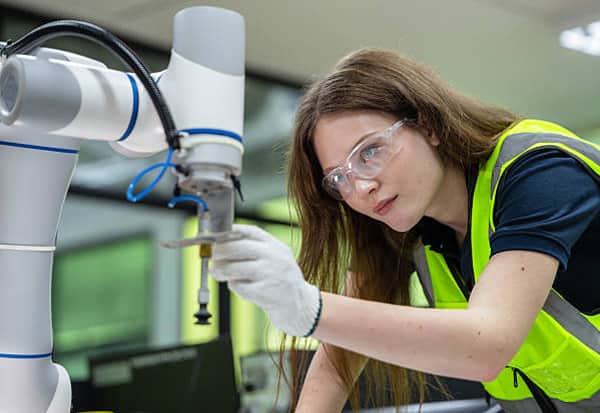
Mechatronics has emerged as one of the fastest-growing engineering disciplines, combining mechanical engineering, electronics, computer science and control engineering to design intelligent, automated systems. As industries increasingly adopt robotics, artificial intelligence (AI) and smart manufacturing, the demand for mechatronics engineers is expected to grow significantly.
Undergraduate programme
A bachelor's degree in Mechatronics introduces students to the fundamentals of physics, mathematics and core engineering concepts before progressing to specialised subjects such as mechanical design, electronic circuits, microcontrollers, sensors, computer programming, robotics, electrical drives and control systems.
Candidates seeking admission must have completed Class 12 or an equivalent qualification with Physics, Chemistry and Mathematics, or Computer Science, as core subjects.
Admissions to engineering colleges across India are offered through entrance examinations such as JEE, while students in Tamil Nadu can secure admission to government and several private engineering colleges through the Tamil Nadu Engineering Admissions (TNEA) counselling process.
Postgraduate studies
Master's programmes in Mechatronics focus on advanced technologies, including robotics, automation systems, electromechanical design, intelligent control systems, artificial intelligence and machine learning.
Applicants must hold a BE or BTech degree in Mechatronics, Mechanical Engineering, Electronics, Electrical Engineering or a related discipline.
Admission to government institutions is generally based on GATE scores, while some private institutions conduct their own entrance tests and interviews.
Career opportunities
Graduates can pursue careers in a wide range of industries, including automation, robotics, manufacturing, aerospace, defence, medical electronics, industrial control systems, and research and development.
They can work as mechatronics engineers, robotics developers, automation engineers, system integrators, control systems engineers or research scientists in leading Indian and multinational companies.
Strong future prospects
The rapid adoption of Industry 4.0 technologies, smart factories and AI-driven automation has made Mechatronics one of the most promising engineering specialisations.
As industries increasingly rely on intelligent machines and automated systems, the demand for skilled mechatronics professionals is expected to rise steadily. The field also offers excellent opportunities in research, innovation and emerging technologies, making it an attractive career option for students interested in designing the next generation of smart systems.

Advertisement